ela zahara de los atunes
  • Ayuntamiento
    • Saludo del presidente
    • Estatuto orgánico de funcionamiento
    • Escudo y bandera
    • Junta vecinal
    • Presupuesto generales
    • Actas de sesiones
    • Ordenanzas municipales
    • Bandos y noticias
    • Listado bolsa de trabajo
    • Reglamento de la bolsa de trabajo
    • Formularios
  • Juventud
    • Actividades juveniles
  • Fiestas
    • Fiestas en Zahara
    • Feria
    • Romería de San José
    • Velada del Carmen
    • Carnaval
    • Semana Santa
    • Fiestas de Navidad
    • Ruta gastronómica del atún
    • Ruta gastronómica del retinto
  • Cultura
    • Historia
    • Patrimonio
      • PUNTOS INFORMATIVOS / CULTURAL SPOTS
      • CASAS CAÑONES / BARREL-VAULTED HOUSES
      • ESCUELA ANTIGUA / THE OLD SCHOOL
      • PALMERA DEL PALACIO / THE PALACE PALM TREE
      • EL VAPOR "GLADIATOR" / THE STEAMSHIP "GLADIATOR"
      • IGLESIA NTRA. SRA. DEL CARMEN / EL CARMEN PARISH CHURCH
      • RIO CACHÓN / RIVER CACHÓN
      • MILLA NAÚTICA / NAUTICAL MILE
      • CASA CHANCA / THE "CHANCA"
      • PALACIO DE LAS PILAS / THE PALACE OF "LAS PILAS"
      • TORRE DE LEVANTE / TOWER OF LEVANTE
      • POSTES DE LA RAMADA / POLES OF THE RAMADA
      • CUARTO DE LOS DUQUES / ROOM OF THE DUKES
      • PALACETE DEL CONSORCIO ALMADRABERO / PALACE OF THE "ALMADRABAS" CONSORTIUM
      • PILETAS / TUNA POOLS
      • TORRE DE LA VELA / TOWER OF THE VELA
      • TORRE DE PONIENTE / TOWER OF PONIENTE
    • Biblioteca pública
    • Centro Guadalinfo
    • Asociaciones
      • Hogar del pensionista
      • Asociación Vecinos El Palacio
      • Asociación de Mujeres de Zahara
      • Asociación Deportiva
      • Asociación Parroquial
      • Asociación Vecinos El Pradillo
      • Asociación de Comerciantes
    • Agenda Cultural
  • Deportes
    • Alquiler pistas deportivas
    • Escuela municipal de pádel
    • Actividades deportivas de invierno
    • Actividades deportivas de verano
  • Turismo
    • Quiénes somos /About us
    • Nuestra historia / Our past
    • Qué hacer / What to do in Zahara
    • Qué comer / What to eat
    • Agenda cultural / Cultural events
    • Guia online / Online guide
    • Alojamiento / Hotels list
    • Callejero / Street map
    • Oficina de Turismo / Q de Calidad
    • Senderismo / Trekking
    • Política de calidad
  • TABLÓN DE ANUNCIOS Y TRANSPARENCIA

Uncategorised

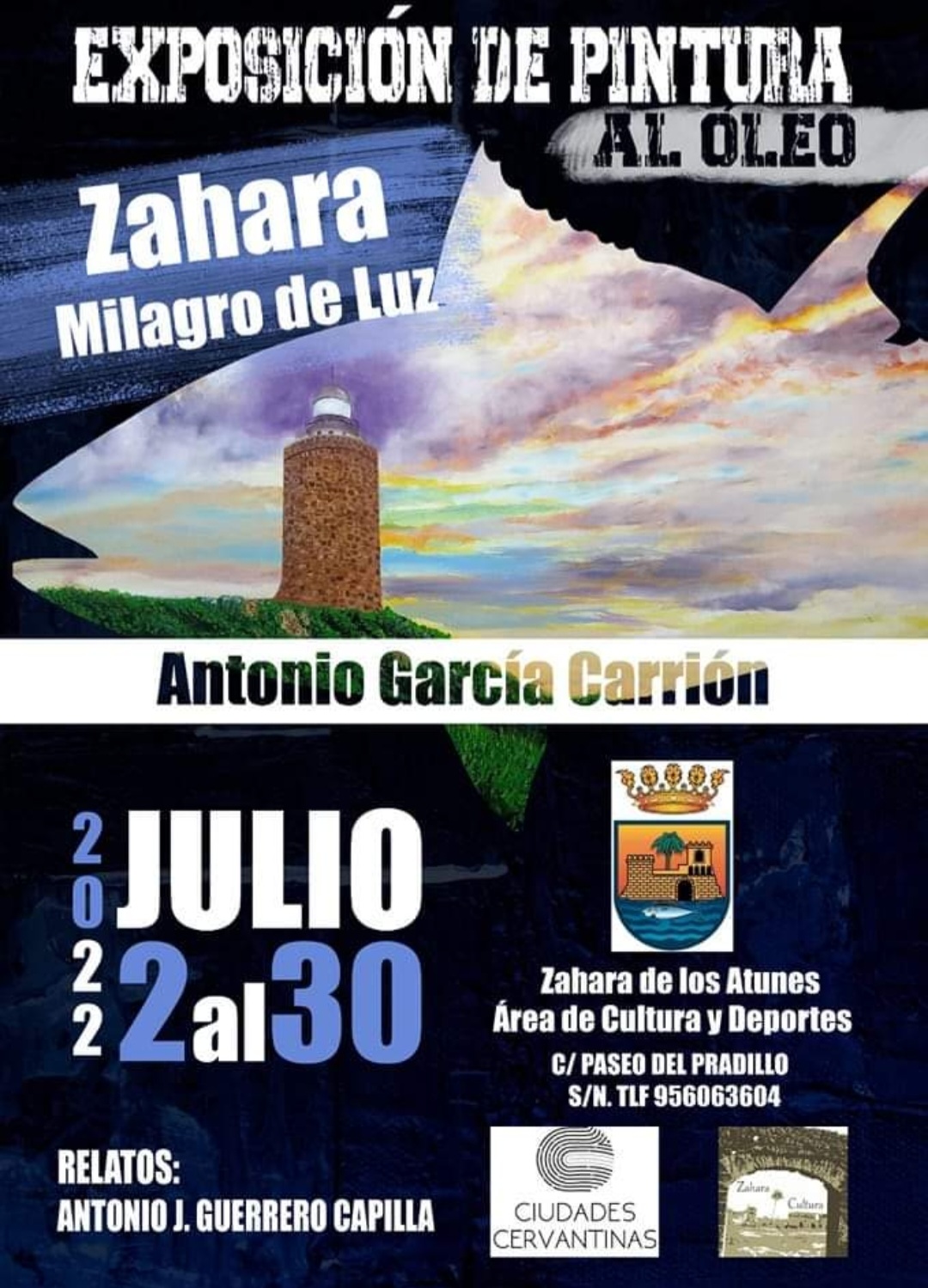
EXPOSICIÓN DE PINTURAS DE ANTONIO GARCÍA CARRIÓN

EXPOSICIÓN DE PINTURAS DE ANTONIO GARCÍA CARRIÓN

AYUNTAMIENTO DE ZAHARA DE LOS ATUNES

DEL 2 AL 30 DE JULIO DE 2022

HORARIO: DE 09: A 14:00 HORAS

EL VAPOR "GLADIATOR" / THE STEAMSHIP "GLADIATOR"

"EL VAPOR". 
El martes 12 de diciembre de 1.893 encalló en Zahara el "GLADIATOR",  matrícula de Glasgow. Varias horas antes había tocado fondo cerca de Tarifa, abriéndose una vía de agua en su interior. 
 
A las 06:40 de ese mismo día, el comandante de la Marina de Cádiz recibió este escueto telegrama:
" Vejer 12 (6,40)- Barba. Vapor inglés Gladiator, Capitán David Kin, procedencia Gibraltar, destino Liverpool, diez y siete hombres, embarrancó en la tarde de hoy playa Zahara; gente y equipajes salvados. Tocó cabezas Tarifa; detalles correo."
 
Varios días después, concretamente los días 15 y 16 de diciembre de  1893, el periódico "El Imparcial" en su edición de Madrid publicaba las siguientes noticias del Naufragio:
"Acaban de llegar los tripulantes del vapor Gladiator que, como dije ayer, se dirigía desde Gibraltar a Liverpool, con cargamento consistente en 600 cajas de azúcar. Según me ha referido un tripulante, el buque tocó en el bajo las Cabezas, frente a Tarifa. A consecuencia del choque se abrió una gran vía de agua. A pesar de esto, continuaron navegando más de 15 millas pero al ver que el buque empezaba a sumergirse, dispuso el capitán que se embarrancase en la playa de Zahara, como así se hizo.
Enseguida el capitán dispuso lo necesario para que el buque fuese abandonado. Cuando se disponían a cumplir las órdenes del capitán , llegó el ayudante de marina para prestar los auxilios necesarios. Uno de los botes en que iban varios tripulantes fue echado a pique por un golpe de mar. También estuvo en peligro de zozobrar otro bote que acudió en auxilio, como el anterior, y que salvó tres tripulantes. Del buque solo pudo extraerse la documentación y el equipaje. 
 
El Gladiator se partió completamente durante la última madrugada. No es posible salvar nada del cargamento, que valía cien mil duros (500.000 pesetas = 3.000 Euros). El buque costó cuarenta mil, pesaba mil toneladas y fue construido hace treinta años en Inglaterra y estaba asegurado. Los náufragos regresarán inmediatamente a Inglaterra. con los náufragos ha venido a Cádiz el naviero Sr. Haines, que salió ayer con objeto de ver si podría salvar al Gladiator."
 
No hubo que lamentar desgracias personales, pues queda constancia que tanto el capitán del vapor David Kin, com los restantes miembros de la tripulación fueron trasladados desde Zahara al puerto de Cádiz en dos carruajes, donde embarcaron con destino a Liverpool. Los gastos corrieron por parte del gobierno británico. Los intentos por reflotar el barco fueron en vano. 
 
Hoy es uno de los símbolos más importantes y reconocidos de Zahara de los atunes.
 

"THE STEAMSHIP".


On Tuesday, December 12th 1893, the "Gladiator", registered in Glasgow, ran aground in Zahara. Several hours earlier it had run aground near Tarifa, opening up a leak in its interior.

At 06:40 that same day, the commander of the Cádiz Navy received this brief telegram:

"Vejer 12 (6.40)- Barba. English steamship Gladiator, Captain David Kin, from Gibraltar, destination Liverpool, seventeen men, ran aground this afternoon on Zahara beach; people and luggage saved. Headed for Tarifa; mailing details ".

Several days later, specifically on December 15th and 16th 1893, the newspaper "El Imparcial" in its Madrid edition published the following news of the shipwreck:

"The crew of the steamer Gladiator which, as I said yesterday, was bound from Gibraltar to Liverpool, with cargo consisting of 600 boxes of sugar, have just arrived. According to what a member of the crew has told me, the vessel struck the Bajo las Cabezas, off Tarifa. As a result of the collision, a large waterway opened up. Despite this, they continued sailing for more than 15 miles, but when they saw that the ship was beginning to submerge, the captain ordered it to run aground on the beach of Zahara, which it did.

The captain immediately arranged for the ship to be abandoned. When they were about to carry out the captain's orders, the naval aide arrived to provide the necessary aid. One of the boats carrying several crew members was capsized by a blow from the sea. Another boat, which came to the rescue and saved three crew members, was also in danger of capsizing, like the previous one. Only documentation and luggage could be removed from the vessel.

The Gladiator broke down completely in the early hours of the morning. It was not possible to salvage any of the cargo, which was worth 100,000 duros (500,000 pesetas = 3,000 Euros). The ship cost forty thousand, weighed one thousand tons, was built thirty years ago in England and was insured. The castaways will return immediately to England. The shipowner Mr. Haines came to Cadiz with the castaways, who left yesterday to see if he could save the Gladiator".

No personal misfortune was to be regretted, as it is recorded that both the captain of the steamer David Kin and the remaining members of the crew were taken from Zahara to the port of Cadiz in two carriages, where they embarked for Liverpool. The expenses were paid by the British government. The attempts to refloat the ship were in vain.

Nowadays “The Steamship” (Known as “El Vapor”) is one of the most important and recognised symbols of Zahara de los Atunes.

IGLESIA NUESTRA SÑRA DEL CARMEN / VIRGIN OF EL CARMEN PARISH CHURCH

PARROQUIA NUESTRA SEÑORA DEL CARMEN.
 
Se encuentra ubicada en lo que fue la Nave de la Sal de la Fortaleza Casa Chanca de Zahara de los Atunes (siglo XVI). De nave rectangular con bóveda de cañon con ladrillos adovelados. Fue inaugurada como Iglesia el 31 de mayo de 1906 (el Diario de Cádiz se hizo eco de la noticia y la publicó el 21 de mayo de 1906), dedicada a la Virgen del Carmen
 
La iglesia en sus inicios ocupaba las dos primeras crujías o arcadas de las 7 que tenía la nave de la sal. Y se abrió un gran arco de medio punto para hacer de entrada principal. El padre D. Francisco Fernández Caro (foto 6) fue su impulsor.
 
El 28 de septiembre de 1944, el obispo de Cádiz, D. Tomás Gutiérrez Díaz, erigió la iglesia de Zahara en Parroquia Rural, segregándola de la del Salvador, de Vejer, a la que hasta entonces pertenecía.
 
- 1a AMPLIACIÓN (1959-1963).
 
El padre D. Manuel Hermida (foto 7)  fue el impulsor de esta ampliación, que se hizo en dos fases. Se retrasó la cabecera cogiendo 2 arcadas, haciendo 4 arcadas de las 7 de la nave original.
 
- 2a AMPLIACIÓN Y RESTAURACIÓN (1991-1992).
 
Impulsada por el sacerdote D. Francisco Aragón 
(foto 8). Consistió en la construcción de nuevas dependencias y despachos parroquiales, el derribo del muro central dividía a la nave de la sal en dos, añadiendo ahora las 3 arcadas restante de la nave original, con lo que la parroquia ocupó la totalidad de lo que fue la nave de la sal en el sXVI. Y se restauró los revestimientos de cemento que ocultaban la piedra original.
 
- 3a Y ÚLTIMA RESTAURACIÓN (2012).
 
Promovida por el párroco D. Fructuoso Antolín Camacho (foto 9) y el grupo vecinal pro restauración de la iglesia, formado por vecinos y vecinas de Zahara. Estos trabajos consistieron en la limpieza general y a fondo de todos los parámetros del edificio. Se instaló bajo el suelo una cámara de conductos y bovedillas cerámicas para favorecer la ventilación natural. Se redecoró el templo con un diseño más sobrio.( Fotos 2,3,4 y 5).
 
-parroquiazaharadelosatunes@blogspot.com
-Guía de Zahara de los Atunes (E.L.A de Zahara de los Atunes.
- Historia propedéutica de Zahara de los Atunes, de Francisco Javier Trujillo.
 

NUESTRA SEÑORA DEL CARMEN PARISH CHURCH.


It is located in what was the salt cellar of the Fortaleza Casa Chanca in Zahara de los Atunes (XVI century). It has a rectangular nave with a voussoir brick barrel vault. It was inaugurated as a church dedicated to the Virgen del Carmen on May 31, 1906 (the Diario de Cádiz published the news on May 21, 1906).

In its beginnings, the church occupied the first two bays or arcades of the 7 that the nave of the salt had. A large semicircular arch was opened as the main entrance. Father D. Francisco Fernández Caro (photo 6) was its promoter.

On September 28, 1944, the bishop of Cádiz, D. Tomás Gutiérrez Díaz, erected the church of Zahara in Rural Parish, segregating it from the one of Salvador, of Vejer, to which it belonged until then.


- 1st ENLARGEMENT (1959-1963).


Father Manuel Hermida (photo 7) was the driving force behind this enlargement, which was carried out in two phases. The chancel was moved back taking 2 arches, making 4 arches out of the 7 of the original nave.


- 2nd ENLARGEMENT AND RESTORATION (1991-1992).


Promoted by the priest D. Francisco Aragón.

(photo 8). It consisted of the construction of new parochial dependencies and offices, the demolition of the central wall that divided the shed of the salt in two, adding now the 3 remaining arcades of the original shed, making the parish occupy the totality of what was the shed of the salt in the XVI century. The cement coverings that hid the original stone were also restored.


- 3rd AND LAST RESTORATION (2012).


Promoted by the parish priest D. Fructuoso Antolin Camacho (photo 9) and the neighborhood group for the restoration of the church, formed by neighbors of Zahara. These works consisted of a general and thorough cleaning of all the parameters of the building. A chamber of ducts and ceramic vaults were installed under the floor to favor natural ventilation. The temple was redecorated with a more sober design (Photos 2, 3, 4 and 5).


-


RÍO CACHÓN / RIVER CACHÓN

RÍO CACHÓN Y LA PALABRA "CACHONDEO".
 
El río Cachón es la unión de dos arroyos (Candalar y Zarzuela) que nacen en la Sierra de la Plata y bordea al pueblo de Zahara de los Atunes y desemboca en el Océano Atlántico. En tiempos de las almadrabas era conocido como "Río Salado". Generalmente se nutre del agua del mar y depende de las mareas. Tiene una superficie de 0,045 Km2.
Etimológicamente "Cachón" hace alusión a una ola marina que se deforma en la playa y hace un borbollón o hervor (espuma).
 
Existen varias teorias entorno al nacimiento del vocablo "Cachondeo":
- La primera teoría proviene de Zahara de los Atunes, el motivo es está bañada por el río Cachón, a cuyo nombre atribuyen el origen de la palabra "cachondeo", ya que los almadraberos, una vez terminada la jornada, montaban sus fiestas a orillas del río Cachón.
- La segunda teoría es que en la antigüedad se refería a las zonas en las que se establecían las prostitutas para ofrecer sus servicios, dando lugar a la acepción que explica que "cachondeo" es sinónimo de fiesta.
- La tercera teoría tiene su origen en el vocablo "cachorro" por el alboroto que provocaban las crías de perro. Así aparece en el Breve Diccionario Etimológico de la Lengua Española (1961), de Joan Corominas y en mismo diccionario de la Real Academia de la Lengua.
 

THE CACHÓN RIVER AND THE WORD "CACHONDEO".


The Cachón River is the union of two streams (Candalar and Zarzuela) that originate in the Sierra de la Plata and borders the town of Zahara de los Atunes and flows into the Atlantic Ocean. In the time of the “almadrabas'' it was known as the "Río Salado" (Salt River). It is generally fed by sea water and depends on the tides. It has a surface area of 0.045 km2. Etymologically, "Cachón" alludes to a sea wave that breaks on the beach and bubbles or boils (foams).

There are several theories about the birth of the word "Cachondeo":

 - The first theory comes from Zahara de los Atunes, the reason being that it is bathed by the river Cachón, to whose name they attribute the origin of the word "cachondeo", as the “almadraberos” would set up their parties on the banks of the river Cachón, once the day was over.

 - The second theory is that, in ancient times it was used to refer to the areas where prostitutes settled to offer their services, giving rise to the meaning that explains that "cachondeo" is synonymous with partying.

- The third theory has its origin in the word "cachorro" (puppy) from the uproar caused by young dogs. This is how it appears in the Breve Diccionario Etimológico de la Lengua Española (1961), by Joan Corominas and in the dictionary of the Real Academia de la Lengua.

PALMERA DEL PALACIO / THE PALACE PALM TREE

LA PALMERA DEL PALACIO. (1916-17).
 
En sus inicios formó parte de una primitiva huerta que plantó el  sacerdote alemán Guillermo Zicke, en los año 1916-17, en el patio donde se colocaban los postes de la Ramada.

Leer más: PALMERA DEL PALACIO / THE PALACE PALM TREE

  1. MODELO DE SOLICITUD BOLSA DE TRABAJO 2020-2022
  2. SOLICITUD BOLSA DE TRABAJO 2020-2022
Síguenos en ...
  • Contacto

2026 Web desarrollada por EPICSA